Performing major maintenance at Intersnack Doetinchem

Published Oct. 16, 2024

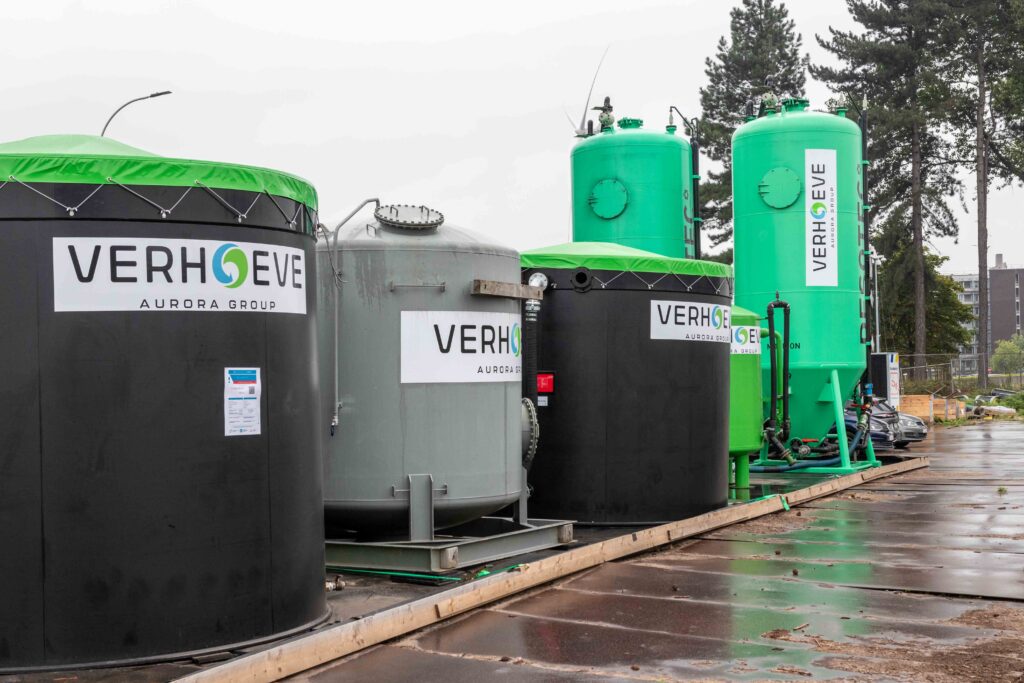
Verhoeve Nederland BV has been providing treatment of production wastewater since 2022. Purification takes place before it is discharged into the sewer system. An advanced installation separates the fats used in the production process of snacks from the rinse water. 

Intersnack Nederland BV produces at its Doetinchem location a large assortment of types of peanut butter, bran nuts, (un)salted fried and roasted nuts for the North and West European market. This includes its own brands such as Chio. 

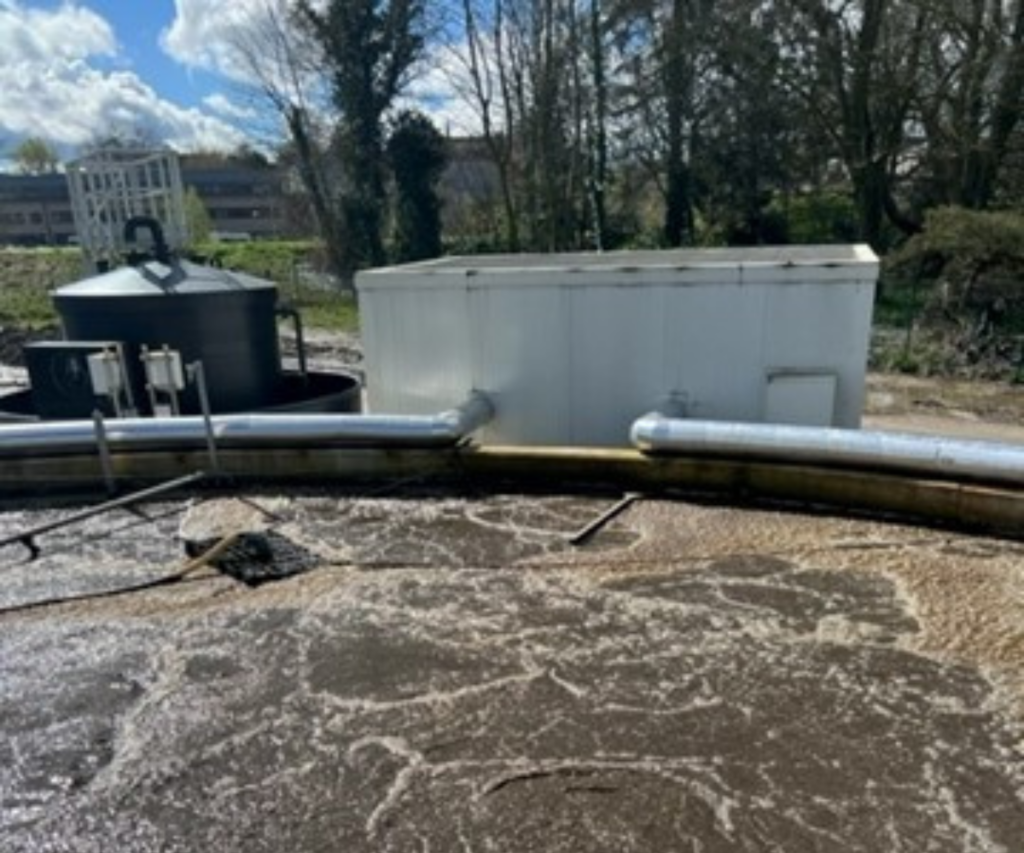
Periodically, major maintenance takes place and the separation plant and tanks are thoroughly cleaned. Also this time it was a nice cooperation with Te Kloeze Riooltechniek and Olthuis Recycling. Intersnack can move forward with production again.

Intersnack Netherlands

Verhoeve purifies groundwater at site of R4 works in Ghent

Published Oct. 16, 2024

As part of the complete reconstruction of the R4 around Ghent, preparatory work is to be carried out between Ghent-North and Zelzate in the coming years. At several intersections, utility pipes will have to be rerouted, which means that the groundwater will have to be lowered locally by means of drainage.

Along this 30-km stretch, several groundwater contaminants (PFAS, among others) are present, requiring treatment of the pumped water.

Groundwater treatment plants

Commissioned by Besix, Verhoeve is providing the necessary groundwater treatment plants (up to 50 m3/h) for this purpose, consisting of various components such as buffers, sand filters and carbon filters.

To this end, Verhoeve, in close consultation with Besix, provided customization of new buffers (20 units), various control containers of its own design and make) and deployment of various small equipment.

First installation

The first plant was started up in July 2024, the next one has already been mobilized and will be commissioned in early November. After rerouting the utility lines, several WWTPs should also be provided during the effective reconstruction of the R4.

Collaboration

Besix and Verhoeve have the commitment to carry this out completely together so that we will be busy here until 2030 installing and maintaining the necessary installations. Through this great cooperation, a solution can be offered to the PFAS problem around the R4.

Published Oct. 14, 2024

Replacement of aeration dishes without process interruption

At RWZI Westerlo, Verhoeve Belgium is replacing aeration bulkheads without disrupting treatment processes. Aeration bulkheads are periodically renewed every 8 to 10 years for optimal efficiency.

For installations with multiple aeration basins, this can be done after alternately emptying one basin at a time in dry weather. When only one basin is present, retractable frames are used so that the dishes can be replaced frame by frame. After replacement, a pattern test is first performed at shallow immersion, as shown in our video.

New frames are currently being installed and tested at WWTP Westerlo.

Published Sept. 24, 2024

Former Channel Polder landfill remediated: A piece of nostalgia and a moment of reflection

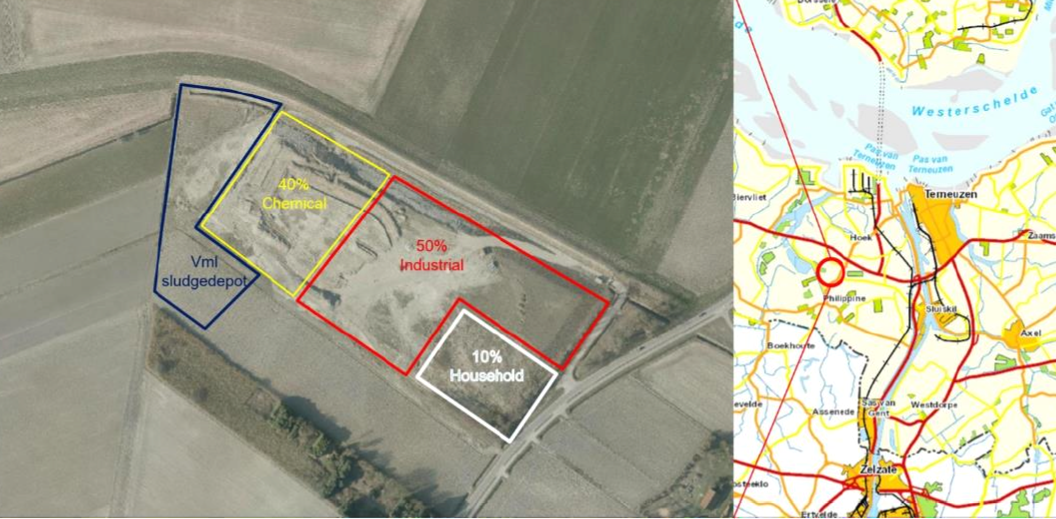
In 2012, the contract was signed between the province of Zeeland and Verhoeve for the largest soil remediation project in the province: the soil remediation of the Kanaalpolder household and chemical landfill in Philippine.

A former landfill where soil and groundwater became contaminated with a cocktail of contaminants: oil, aromatics, vocl, phenols, creosols, etc.

Total contaminated soil volume: 505,000m3, available budget: €1,800,000, and available time: through 2024. Go figure. A cocktail of contaminants requires the use of a cocktail of techniques that Verhoeve has at its disposal. Chemical, physical and, of course, biological.

Remediation Objective:

The remediation will effectively remove as much contamination load as possible within the target area in order to achieve a clear and sustainable improvement in groundwater quality in the source and plume areas. By reducing the load in the source area and parts of the plume area, subsequent delivery of the (residual) contamination to the groundwater is minimized. The concentrations in the groundwater then decrease over time due to degradation and dilution, the plume will have to become stable within a period of 30 years. The vulnerable objects (surface water in ditches and Philippine Canal) will no longer be threatened. This will create an environmentally acceptable final situation within 30 years without the need for active aftercare. After completion, normal use of the area will be possible with limited restrictions on use.

After lab testing and pilot testing, Verhoeve began Full-scale remediation in 2017 using:

  • Chemical oxidation (ISCO);
  • Biosparging;
  • Pump and Treat.

Initially, the extremely high hotspots were addressed by ISCO (Perozox®). As soon as a sub-area was no longer toxic, a switch was made to biosparging and finally the contaminated water was extracted in the toe of the landfill (downstream) by means of deep wells to be infiltrated again on the landfill and there to infiltrate through the biologically active zone.

Now it's 2024 and where are we now?

The remediation evaluation report is currently before the Competent Authority for approval. The result achieved has been tested against the components of the remediation objective above:

  • As much freight removal as possible: there has been a significant freight reduction from 90% to 96%;
  • Within the target area, no pure product is left in the saturated zone; 
  • There is an environmentally acceptable final situation with shrinking plume (at the end of active remediation in 2022 already 80% soil volume reduction);
  • The vulnerable objects surface water in ditches and Philippine Canal are not threatened.

Conclusion

The result achieved meets the objective of groundwater remediation. The groundwater remediation can be completed. Something we can all be proud of. Zeeland is cleaner again.

Image with text, map, screen captureAutomatically generated description

Published June 16, 2024

Expansion works Overschelde sewage treatment plant by Verhoeve Belgium

Aquafin in Flanders faces large-scale renovations and new construction projects at its sewage treatment plants in the coming years. Various projects of various kinds have already been carried out or are in progress by Verhoeve.

In Overschelde, we were part of the team realizing the expansion of the installation to increase capacity. Here Verhoeve was responsible for the electrical and water engineering work.

Initially, we realized new additional influent jacks here as well as a post-sedimentation tank. In addition, we installed a new low voltage building and realized a completely new aeration basin. For this, new lifting aeration frames were installed to ensure sufficient oxygen in the water to be treated via fine-bubble aeration.

For the proper operation of the plant, increasing the oxygen concentration is extremely important. To this end, a number of tests were conducted to demonstrate proper operation and adjust the plant.

More information? Contact us. Wil Brabers or Toine Donkers (Antwerp) can tell you more about this.

Published Feb 15, 2024

Neglected business sites:

At the request of a problem owner and Flemish engineering firm, Verhoeve investigated the possibility of buying off a 'coupling file' in Haaght. By making risks negotiable and involving OVAM with co-financing, an integral whole emerged on which a contract could be based. The site was heavily contaminated by former business activities with volatile chlorinated solvents and floating layers of mineral oil. After years of insistence by OVAM and complex utilization situations, a regular contract for construction proved impossible. In agreement with the owner, a special form of contract was agreed upon, in which remediation including study services was carried out on a lump sum basis after an initial remediation-oriented survey. Negotiations lasted about 6 months, during which the contracting amount was "estimated" based on available budget possibilities and co-financing.

A crucial phase was the GO/NO GO acceptance study, which considered the extent of the VOCL contaminants, the permeability of the soil (injectability), and the final cost. The remediation was to be conducted biologically, and a commitment agreement was signed with OVAM to provide additional assurance that the remediation would be carried out. With good cooperation between the owner, OVAM and the contractor, the site could be tackled energetically after years of discussions, and the coupling issue was resolved.

Identification of contaminants, pay attention to risks 

Many files are examined according to standards and legislation, but this still does not provide a guarantee. In addition to environmental contaminants, factors such as high concentrations, biodegradability, soil permeability, and makro parameters are of great importance. Source zones and historical data are relevant and should be carefully investigated. Management measures should be installed if remediation is delayed but spreading is a risk.

Remediation options and methods

In remediation, it is important to find an innovative and collaborative contractor. Various methods are possible, such as biodegradation, chemical or thermal techniques, or combinations thereof. Decisions must be made based on boundary conditions such as time, cost, risk, accessibility and operations. Innovative remediation techniques are available, but testing and pilots are necessary to reduce risks and avoid stagnation.

Verhoeve, with more than 35 years of experience, provides customized soil and water remediation services. The company specializes in innovative methods and offers various options, from traditional excavation to biological or chemical techniques. Contract forms are adapted to the client's requirements, where trust between client and contractor is crucial.

'Lessons learned': Trust, transparency, and balanced contracts are essential. Verhoeve advises clients and contractors to discuss risks, schedule, and preconditions without stipulating penalties and unattractive payment arrangements in advance. A balanced contract ensures successful execution of projects.

Published Jan 9, 2024

Addressing PFAS in groundwater

Addressing PFAS in groundwater

Australian-American company ECT2 and Verhoeve have signed a cooperation agreement for projects in the field of treatment of ground and process water contaminated with Substances of Very High Concern (SVHC) such as PFAS. ECT2 has accumulated considerable experience in treating ground and process water contaminated with PFAS. Several projects in Australia and the United States have already been successfully implemented through innovative filtration technology using regenerable resin. Using smart filtration and backwashing technology, backwashing "discharges" the saturated resin and stores the nearly pure PFAS separately. The advantage of this is that no (expensive) saturated resin or other filtration material needs to be disposed of or dumped, greatly reducing disposal costs.

Because Verhoeve and ECT2 join forces and work together, all available knowledge and resources within Europe and beyond are deployed to relieve our clients. We take care of the design, construction, installation and maintenance of the wastewater treatment plant.

Published Jan 9, 2024

Verhoeve active for Aquafin in Flanders

Aquafin Flanders

Verhoeve active for Aquafin in Flanders

Werkt has an active role in the renovation process of intermunicipal water treatment plants in Flanders, which program is managed by Aquafin. We recently worked for Aquafin for the installation of 8 new brush aerators at the Eeklo site. Brush aerators are used for surface aeration in the aeration basin of the sewage treatment plant. (WWTP)

Implementation took place in 4 phases, each time replacing 2 brush aerators per basin. Last week, the last two brushes were installed. These brush aerators are controlled by means of oxygen measurements. And this with "master and slaves " basins. The oxygen level in the first basin thus controls the switching on of the brush aerators in the other basins. This is to avoid unnecessary aeration and to obtain the most economical use of electricity. These oxygen meters are installed on board sumps to be newly installed by us.