Lab testing for the purpose of water treatment design

Published May 26, 2025

Verhoeve not only builds water treatment plants, but can also play a role in the preparation in determining the starting points for the treatment. We are regularly asked to provide solutions to challenges in water problems. A small selection of these projects:

  • A new factory site requires significant drainage. The water to be extracted is contaminated with heavy metals (cadmium and zinc) and has a low pH of 4. Verhoeve was engaged by the company to devise a suitable solution to meet the discharge requirements;
  • An existing Ultrafiltration plant at a Dutch grower in Africa keeps clogging up, despite multiple settling and pre-filtration steps. Stable operations are hampered as a result. The exact cause is unclear. Verhoeve was asked to first determine the cause and then offer a solution.

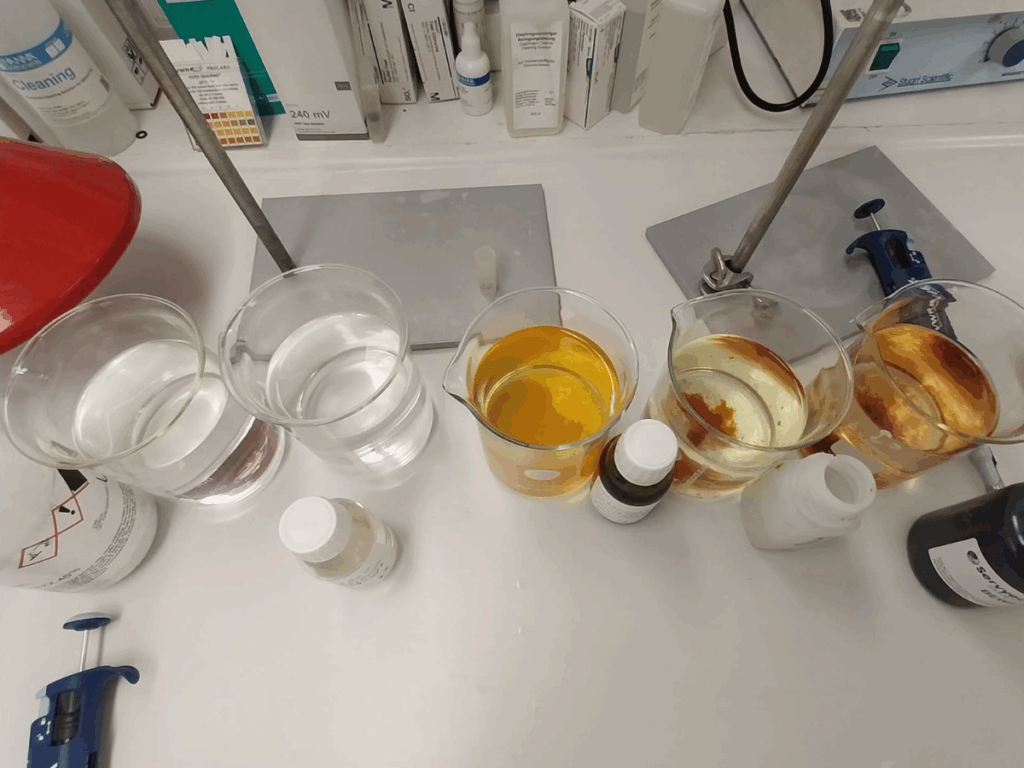
Verhoeve has a testing facility for such issues. For the former project, the new plant site, several tests were conducted with representative water samples. These tests focused on filtration with and without the addition of various additives at different concentrations. The additives include pH correction, coagulant and flocculant.

Attached below is a picture of water with different additives in the tests performed.
Findings

Based on such tests, the nature and quantity of products to be added was determined. For the drainage water contaminated with heavy metals, the concentration of heavy metals before and after treatment was of course also examined. The findings have since been translated for this site into a design for a full-scale water treatment plant with a capacity of 70 m3/hour.

Contact

We can imagine that you have questions, but perhaps you have a problem of your own as described here. If so, please contact Edward van de Ven,(e.vd.ven@verhoevemw.com, +32(0)483270932)
Facilities sewage treatment plant at Lommel (Belgium)

Published May 24, 2025

Verhoeve Belgium performs a wide range of activities. For example, we recently performed work on behalf of Aquafin at the sewage treatment plant in Lommel in Belgium.

Cover influent basin

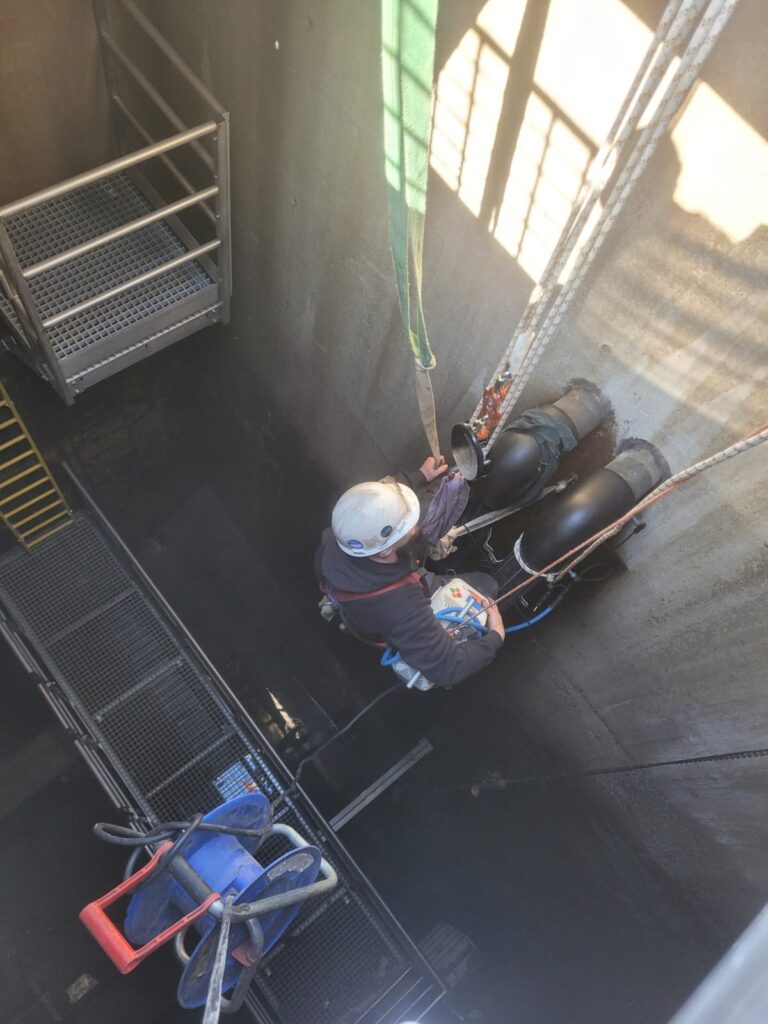
Part of the work involved installing an aluminum cover over the influent basin. The purpose of the cover is to limit nuisance to the surrounding area. From the point of view of safety, the cover was made overflowable, and fitted with a handrail, access ladder and access hatches.

Buffer

Another part of the work involved making facilities in the buffer itself. The purpose of these facilities is to better enable future work in the buffer from an ergonomic point of view. For example, safety ladders and intermediate landings were installed, as well as additional access hatches. In the future, installation parts can now be reached in a better way and lifted out of the basin if necessary.

For more information, please contact Toine Donkers, project manager(t.donkers@verhoevemw.com, +32(0)48 3475 809)

Groundwater treatment plant in Hamme, PFAS removal in groundwater

Published May 22, 2025

The client for this project is Besix Unitec. Besix is currently carrying out work on utility lines in Hamme (Belgium), for which the groundwater level must be temporarily lowered over a distance of approximately 800 metres. The drainage area is located near a fire station, where there is PFAS contamination in the groundwater. In the preparation of the project, it was investigated how the drainage can best take place, and a groundwater purification plant is provided for the execution.

Removing PFAS from drainage water

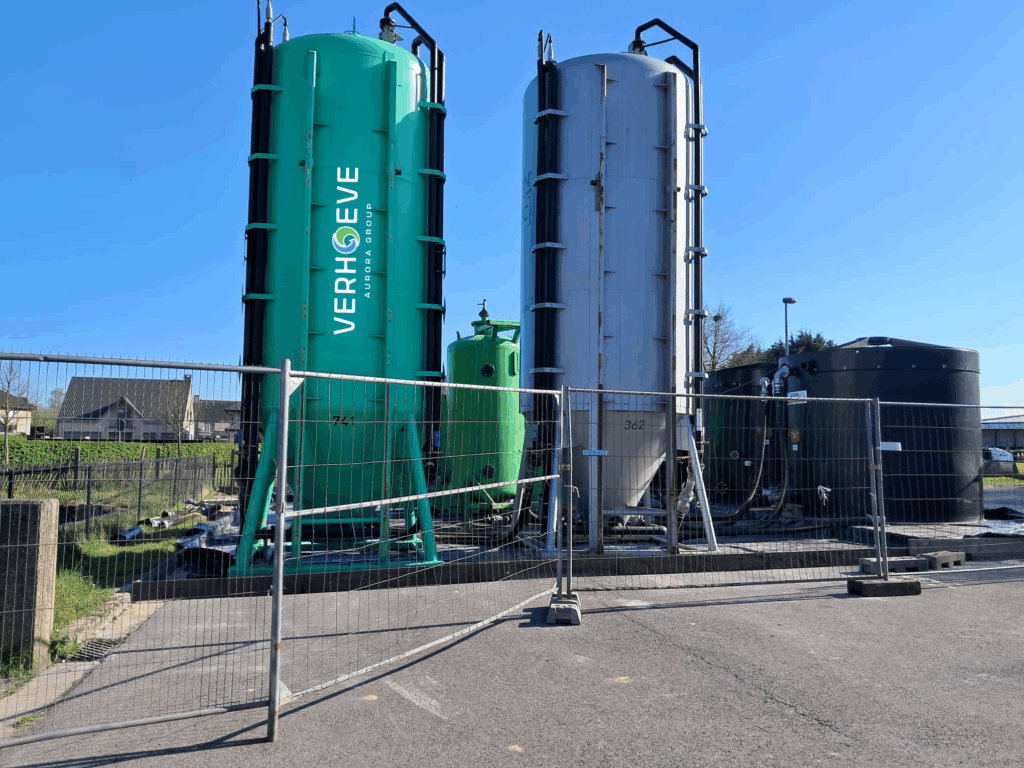
Verhoeve Belgium takes care of removing the PFAS from the drainage water. To this end, a groundwater treatment plant has been built with a capacity of 50 m3/hour. This installation consists of several buffers, a sand filter, 2 activated carbon filters (connected in series) and a central control cabinet. The total installation can be read out remotely and adjusted if necessary.

Good results

The groundwater treatment plant has been running for some time now and the results are more than satisfactory. The entire plant is expected to be in operation at the site for about 8 months.

To learn more about this project, or if you have any questions please contact Jonas Wittocx, project engineer(j.wittocx@verhoevemw.com, +32(0)48 3270 932)

Solving odor problems with ozone

Published May 20, 2025

The Netherlands, like other countries, has many companies that emit unpleasant odors. Examples include the animal feed industry, food industry, sludge composting, slaughterhouses, rubber industry, etc. Verhoeve Nederland works together with its sister company Agrozone Europe BV to help companies significantly reduce their odor emissions so that the surroundings are no longer affected.

Ozone technology for odor treatment

To solve odor problems, we use our specialization with ozone technology. Odor treatment with ozone is a variant of cold oxidation. This is one of the most powerful techniques available today.

Pilot odor test

To determine the amount of ozone needed to remove unpleasant odors, we can perform an odor test as a pilot. In this test we mimic the situation present at the company. With this we can determine what reduction we can achieve and what is desirable for the customer.

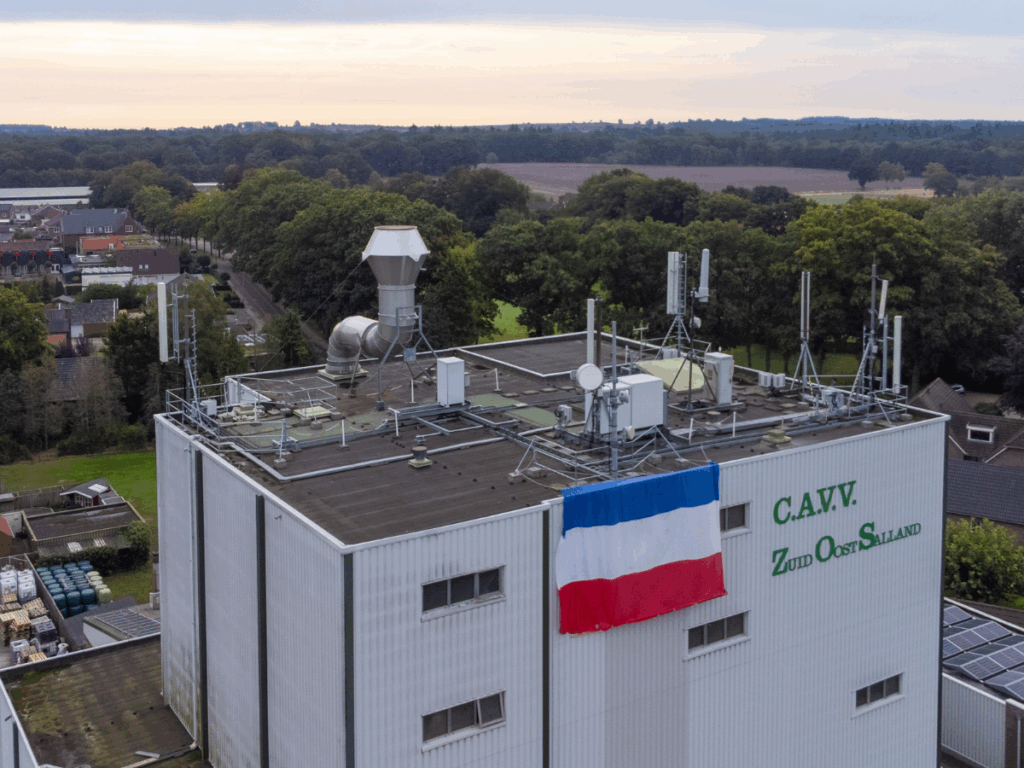
An example project where odor nuisance is solved using our ozone technology is the CAVV Zuid Oost Salland site (see photo).

Do you have any questions? Please contact Jeroen Schoovers,(j.schoovers@verhoevemw.com, +31(0)622552057) or Daniel Moesbergen, commercial manager air and odor(d.moesbergen@agrozone.nl, +31(0)642222203).