
Verhoeve conducts PFOS pilot at Leeuwarden Air Base
Published March 20, 2025
Soil contamination occurred at the former fire department training site at Leeuwarden Air Base due to the use of fire extinguishing water containing PFOS. PFOS is a harmful substance belonging to the PFAS group. The fire extinguishing water leaked into the soil for years and was inadvertently drained through the existing underground drainage system into the adjacent Jelsumer Faert.
Investigation into cause
The Wetterkip Fryslan came across the pollution during research prior to dredging work in the canal. After extensive investigation, the cause was found at the air base. The surface water at and around the base was found to be contaminated with extremely high concentrations of PFOS. The link to the base was quickly established.
The "Leeuwarden Air Base" site is among the most PFOS-contaminated sites in the Netherlands. Besides Leeuwarden Air Base, several other defense sites are contaminated with PFOS. Mainly caused by firefighting foam.
Pilot implementation and collaboration
Because of its expertise in dealing with PFOS-contaminated sites, Verhoeve Netherlands was asked by Rijksvastgoedbedrijf (RVB) to participate in a construction team. Together with consulting firm WSP from Leeuwarden, which had already conducted the soil investigation at the site, a plan of action was made for the implementation of a pilot.
Phased implementation
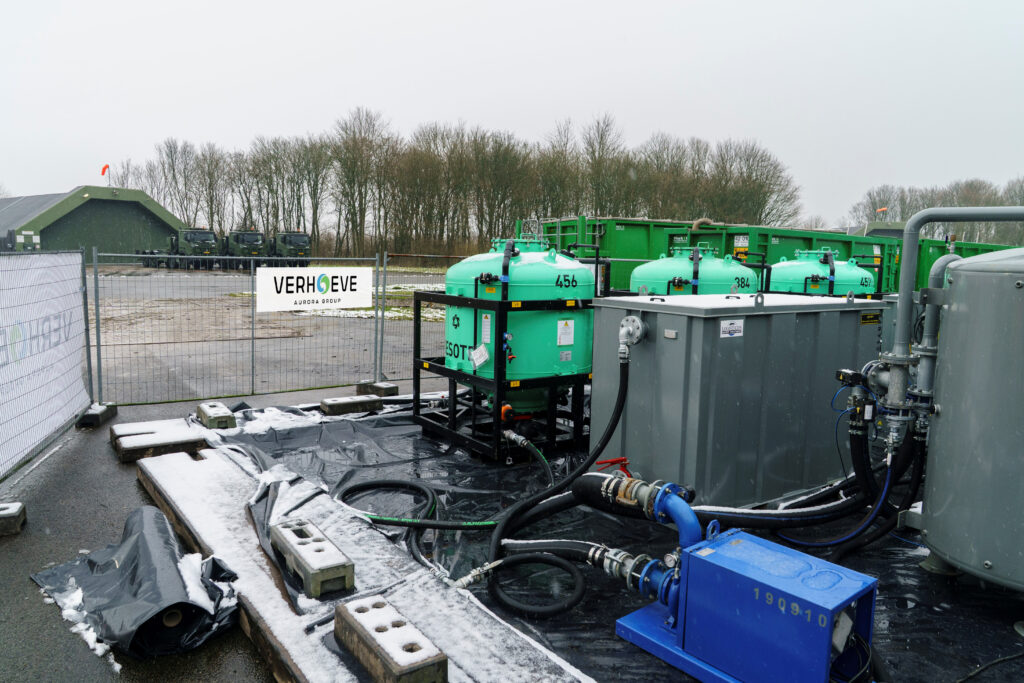
Given the extent of the contamination and the necessary well abstraction requiring prior treatment of the PFOS-containing groundwater, part of the relatively easily accessible source was removed first, referred to as phase 1 (pilot). The pilot was established with the goal of gaining knowledge to address the remaining more extensive contamination (phase 2).
The goal is multiple. How is drainage and treatment of PFOS-containing groundwater possible? What flow rates are released? What is the quality of the deep and shallow groundwater? What is the impact of stress drainage on surrounding infrastructure? What is the best purification technique of the PFOS-containing groundwater and to what concentrations can the PFOS in the water be purified back?
Commissioned by RVB, Verhoeve conducted a test with PFOS-containing groundwater from Leeuwarden Air Base at its test facility in Dordrecht late last year. During this test, different types of aqueous activated carbon were tested on a lab scale from which a best available type emerged that was applied during the pilot.
The pilot conducted has gathered vital information that will be used to scale up the approach for the remaining contamination (Phase 2) later this year. But also to PFOS remediation elsewhere in the Netherlands or abroad.
Applied technique implementation pilot
The PFOS-containing groundwater was pumped up from various layers by means of open and vacuum (tension) pumping, which were previously determined to be concentrated from previous research. The water was stored in large buffer tanks. The initial concentration of the water was determined beforehand. Tests were carried out with this water. The water was cleaned in "batches" by serial sand and activated carbon filtration. After passing each treatment step, water samples were taken to monitor the effect. In cooperation with WSP and Verhoeve, a final report will be drawn up which, as already mentioned, will serve as input for the implementation of phase 2.
Discharge requirements water
Wetterskip Fryslan has always been involved in the design and implementation of the pilot test. In consultation, the monitoring plan has been expanded with additional parameters for better insight into the operation and result of the treatment. The results of the pilot are part of the Wetterskip's consideration in setting the discharge standards for phase 2 of the remediation. For more information, please contact Jan Henk Schuurman 06-12 96 60 57.