
Biological soil remediation of Fenol at Moerdijk
Published Sept. 29, 2025
At an industrial storage site at Moerdijk, Verhoeve removed phenol contamination using an in-situ method during the period 2023-2025. Both implementation and process monitoring were part of the work.
It involved phenol contamination in soil and groundwater from a recent spill. The spill had resulted in phenol being deposited on and in the soil, with locally solidified product present. The contamination was mainly present in the shallow soil layer up to about 3.5 m-mv. In total, 1,250 m3 of soil and 5,000 m3 of groundwater were contaminated. The maximum phenol concentration detected was 10,000,000 µg/l. The presence of company infrastructure prevented removal by excavation and Pump & Treat. To prevent the contamination from spreading further, a management system consisting of Pump & Treat had been put into operation by third parties. The pumped up groundwater containing phenol was temporarily collected in buffer tanks and disposed of by axle at high cost.
Prior to construction, Verhoeve demonstrated by means of a laboratory test in its own test facility in Dordrecht that the contamination could be removed biologically well aerobically. Based on this, Verhoeve drew up a design and Plan of Action. After approval of the Plan by the competent authority, the remediation operation was started.
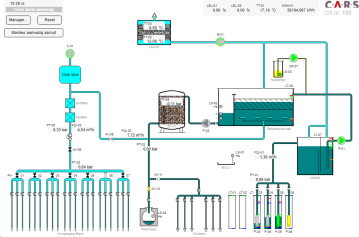
Biological remediation consisted mainly of administering oxygen, nutrients and bacteria to the soil to facilitate aerobic degradation in the soil. Biosparging filters were installed for oxygenation. A groundwater circulation system (the 3 existing deep wells from the containment and 13 additional infiltration drains) with an above-ground aerobic bioreactor was installed for the administration/dispersal of nutrients and bacteria in the soil.
During the implementation of the remediation, additional phenol contamination was found in places, where it did not appear to be present during the investigation. At these locations, the system was expanded with additional filters/drains, which were connected to the existing system. For this, the system was designed to be sufficiently flexible and robust.
Beforehand, 2 years of remediation was planned to remove the remediation target. Despite the additional contamination found, we were able to remove the contamination to the agreed remediation target within this time frame (2023 - 2025).
Contact
Do you have any questions? Please contact Jeroen Schoovers(j.schoovers@verhoevemw.com or +31(0)6 2255 2057).