PFAS laboratory testing: building blocks for a full-scale design
Published May 1, 2026
Over the past few months, Verhoeve has conducted various laboratory tests for PFAS removal for several clients at its testing facility in Dordrecht. These tests include:
- Column tests using activated carbon;
- Resin column testing;
- Foam fractionation testing.
Column tests
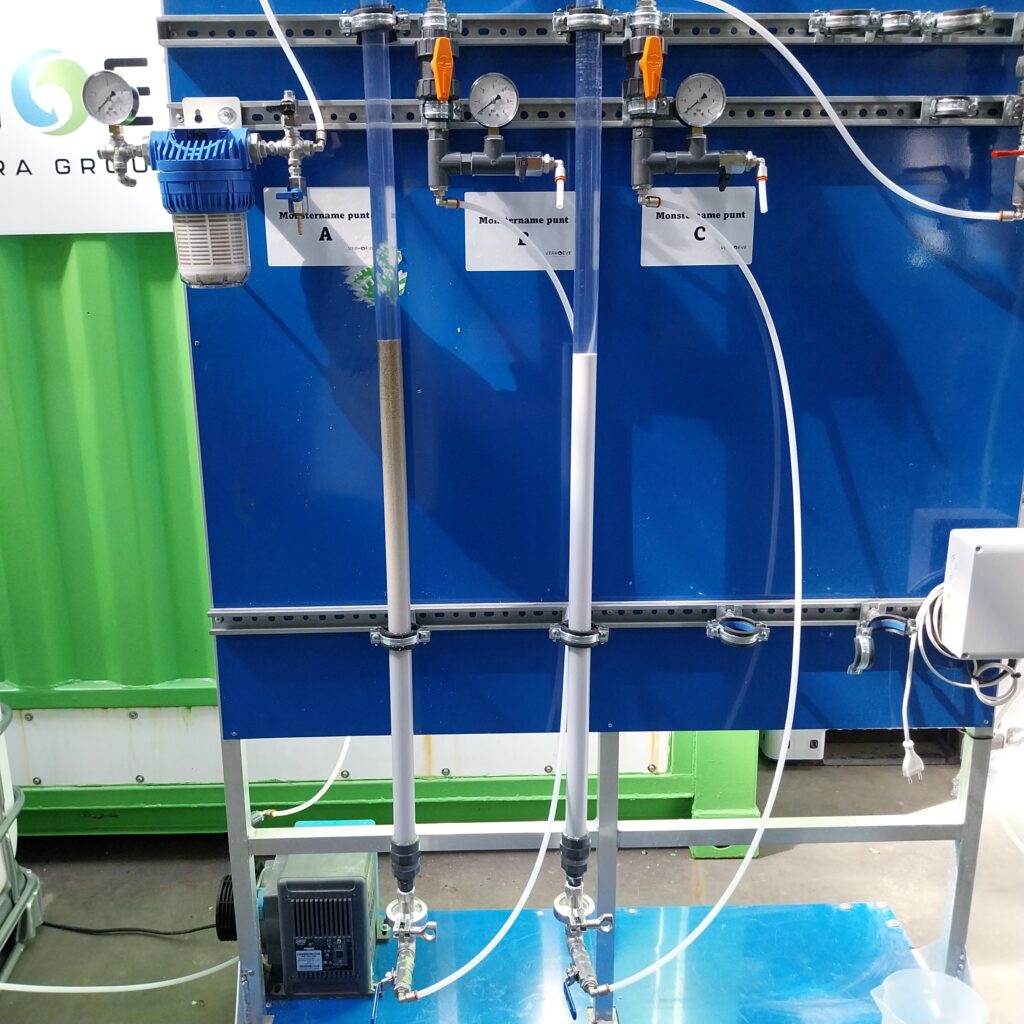
In column tests using activated carbon and resin, the contaminated water is passed over the column containing the adsorption medium at a constant flow rate. In this process, the PFAS are adsorbed onto the medium, with initial recovery rates of up to 100%. The clean water is collected. By regularly analyzing the influent and effluent for PFAS and other parameters, we determine the adsorption efficiency and the breakthrough point. Significant differences in adsorption occur between short-chain and long-chain PFAS. See Figure 1.
Process
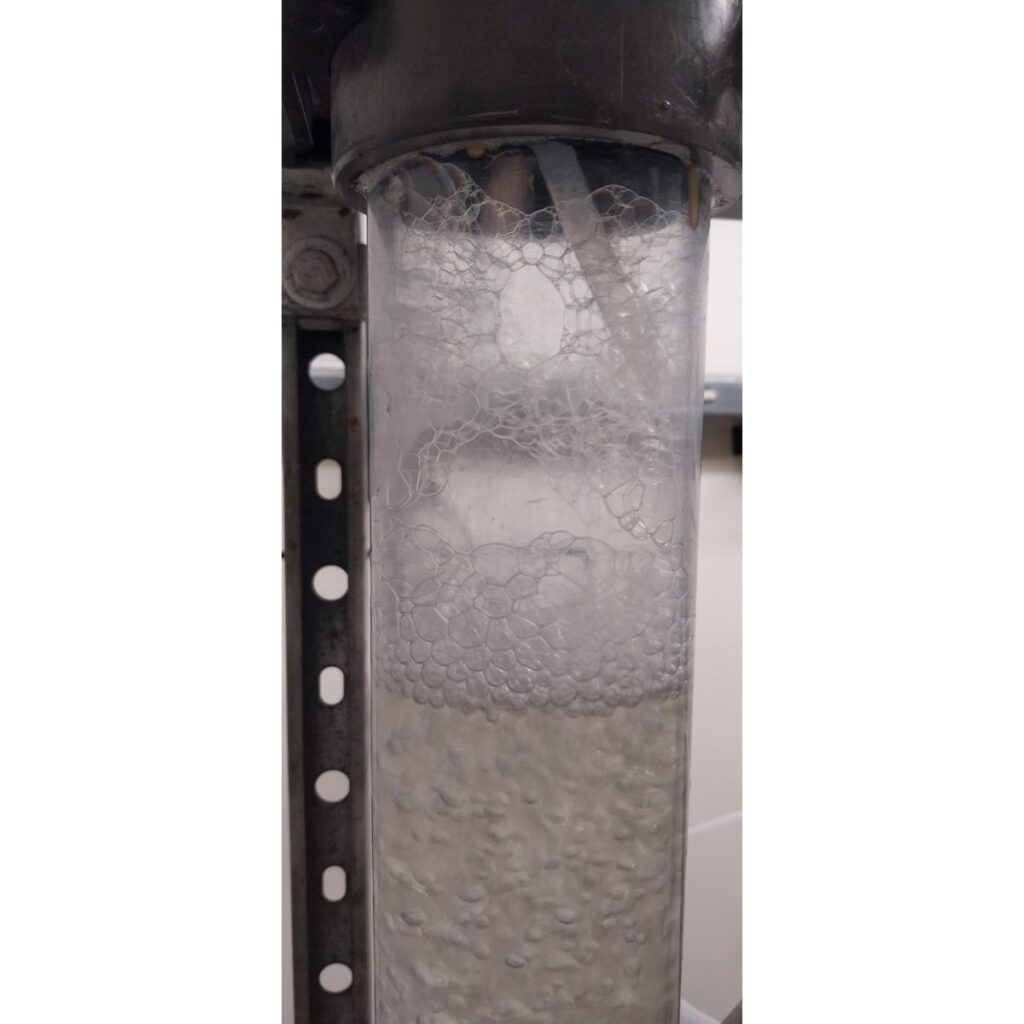
In foam fractionation, we aerate the PFAS-containing water with fine bubbles, causing PFAS foam to form. This foam is separated and collected separately. After the test, two liquid streams remain: one concentrate stream derived from the foam with high concentrations of PFAS, and one permeate stream from which the bulk of the PFAS has been removed. There are also significant differences between individual PFAS compounds. For long-chain PFAS, removal rates of over 95% have been demonstrated. An advantage of the foam fractionation process is that the bulk of the contamination can be concentrated into a small volume for further treatment. The permeate, which contains few PFAS, only slightly burdens any downstream activated sludge and resin, thereby extending their service life. In photo 2, you can see the foam formed during a foam fractionation test.
The column tests using activated carbon/resin and the foam fractionation tests provide valuable insights into the applicability and achievable removal efficiencies for specific PFAS-containing water streams. As such, they serve as important building blocks in the design of PFAS water treatment systems.
Column test setup with resin
Foam formed during foam fractionation