
Applying ozone in Industrial process water? Do's and Dont's!
Published Sept. 29, 2025
Verhoeve has been working with the active substance ozone (O3) for more than 20 years. A special oxidizing substance (in gas form) that is produced 'on site' via a generator from oxygen and has a good cleaning and disinfecting effect.
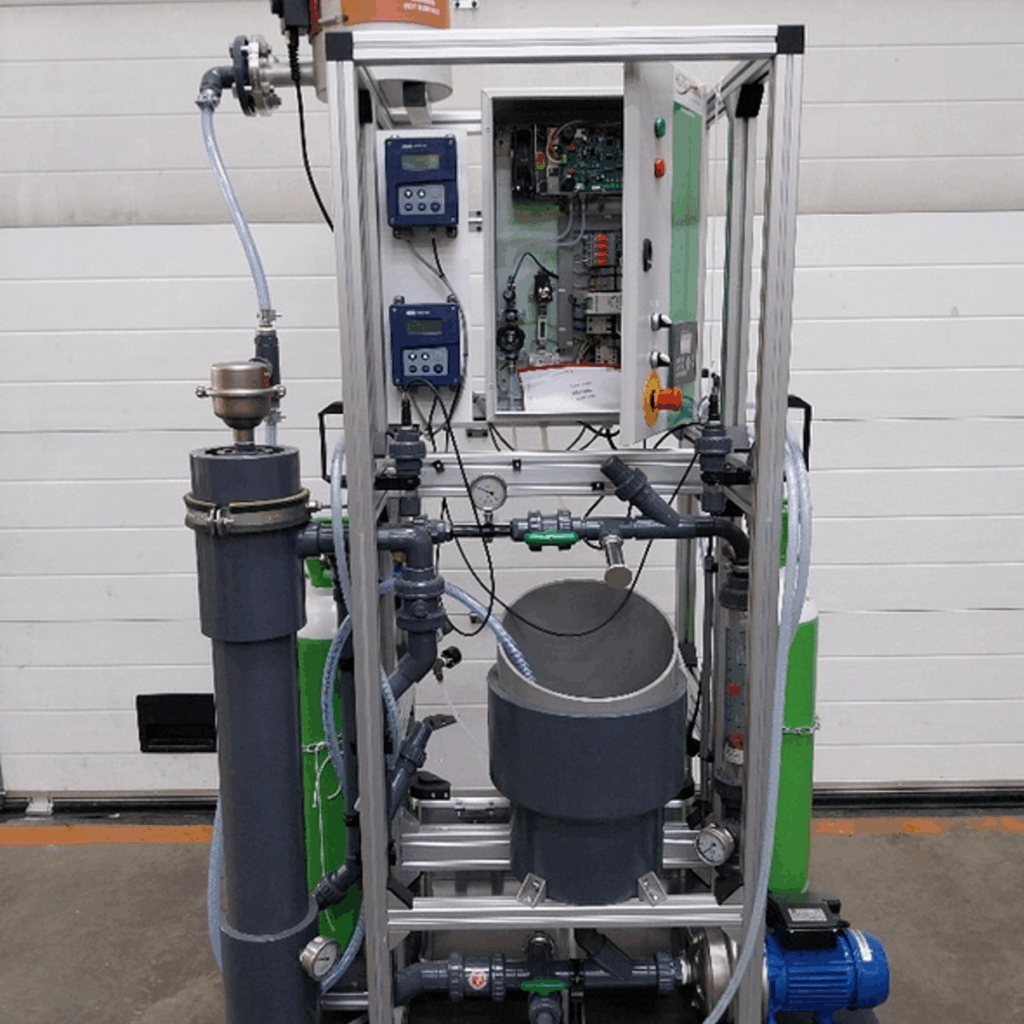
Dealing with contaminants in the soil, dealing with pathogens and bacteria in irrigation or process water, 'cleaning ín place' of airflows: it is all possible, but of course the proper and efficient application requires the necessary know-how and experience. But also to comply with certain rules within the (European) legislation!
It is definitely not the case that every company can 'just' ozone and many applications fall under the so-called Biocide legislation. Verhoeve, together with its sister company Agrozone, is admitted to this via membership of the European association of companies specialized in ozone 'Euota'.
If ozone is used as a technical solution with the aim of reusing industrial process water (e.g. disinfection of human pathogens and bacteria such as E-coli), approved application is guaranteed on the basis of a certified (self-developed) ozone generator that has demonstrated its ability to fulfill the intended purpose (or better claim). Verhoeve manufactures ozone generators in the range of 7 grams per hour to 2,000 grams per hour. In indiction, this enables water flows of 5 to 200 m3/hour to be treated within the aforementioned goal. Ozone as an active substance has been approved at the European level since 2023.
Another example of an ozone application in industrial process water is decolorization and deodorization and (if possible) the frequently associated high COD content. In this case, incidentally, there is 'oxidation' of certain substances in a water stream and Biocide legislation is also not automatically applicable.
In industrial process water, application generally takes place in the context of reusing that water: COD removal, decolorization, deodorization and disinfection. It is also used in support of other techniques such as activated carbon (longer retention time) or UV. Used mainly in the food industry, chemicals and textiles.
The advice is to always work with an approved supplier of ozone products (see, for example, www.euota.org for international suppliers). This can quickly establish feasibility in consultation. Further establish design parameters in the laboratory or through a pilot, but always deploy ozone on its strengths: oxidation of specifically difficult to degrade components, decolorization, deodorization. If properly applied and care is taken with proper design, formation of unwanted byproducts such as bromate, for example, can never occur.
Contact
For more information: Art Lobs(06-51107067 or a.lobs@verhoevemw.com) or Edward van de Ven(06-51864919 e.vd.ven@verhoevemw.com), Dordrecht office.